
Minnesota Nice
Encounters with the friendliest, and most Canadian, of all states

It was my first visit to Minnesota and my first encounter with the phenomenon known as Minnesota Nice. Rosemary and I had biked across the city and joined a long line at the Sea Salt Eatery in Minnehaha Park.
It was a beautiful Saturday afternoon and the restaurant had been highly recommended, so it was looking like a long wait. A guy just in front of us assured us that the food was worth it. He was talkative and chatting up people in front and behind. At some point he went up to the bar and came back with a big pitcher of beer and some glasses and poured drinks for everyone to make the wait go faster.
The province I live in calls itself Friendly Manitoba, but somebody buying a pitcher of beer for strangers in a restaurant line-up is not something I’d ever encountered before.
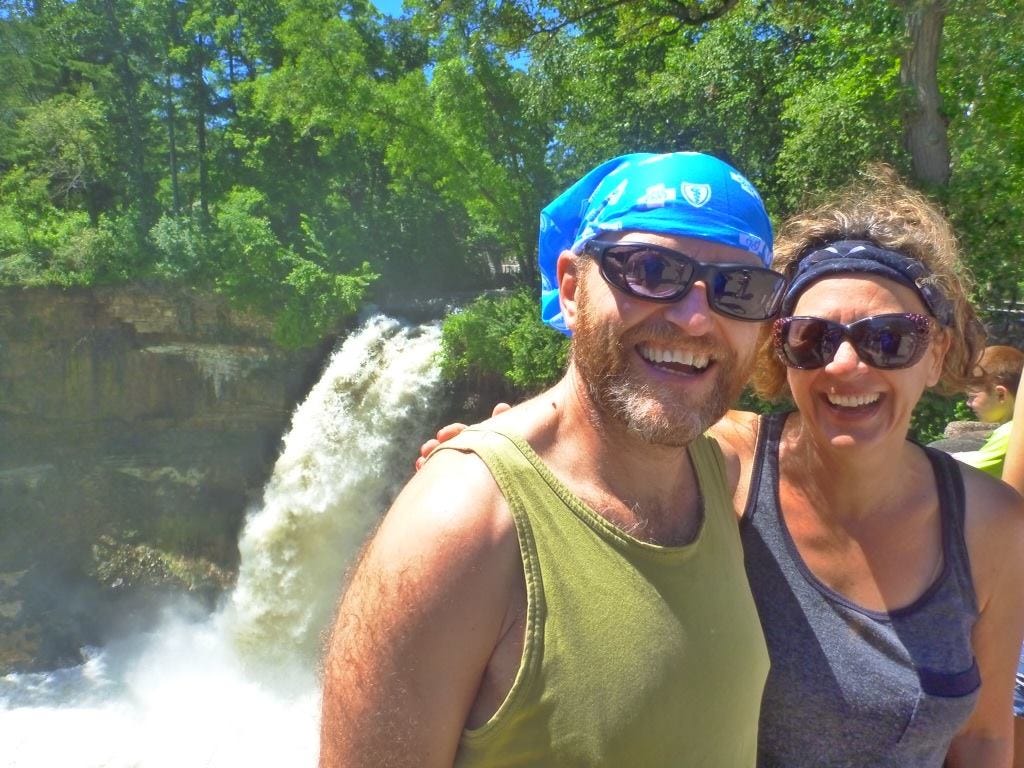
After lunch, before continuing along the city’s beautiful network of bike trails known as the Grand Rounds, we walked down below Minnehaha Falls, where a little creek drops into the steep gorge of the Mississippi River. It had been a wet spring in Minnesota and so the creek was running high and locals said they’d never heard the falls roar like that.
In the pool below the falls, a man let his dog off leash for a moment to cool off in the water and the animal got caught by the current and pushed downstream, the man and a few bystanders trying in vain to reach it. The current was dangerously strong and the man himself ended up getting taken down as well.
Some people ran along the shore trying to help while others pulled out phones to call 911 and soon a rescue vehicle was coming down the trail. The man was rescued. I’m not sure if they got to the dog before it was pulled into the big river.
It was sudden. It was a close call. Things could have turned out a lot worse.
The next time we were in the Twin Cities, we stayed at an Airbnb not far from Minnehaha Park and this time we decided to cross the Mississippi and explore St. Paul.
We biked along the big river to downtown and the state capital building and stopped for beer and bratwurst at an Oktoberfest celebration, where somebody commented to Rosemary about the attractiveness of Canada’s then-new prime minister compared to the Republican candidate for president.
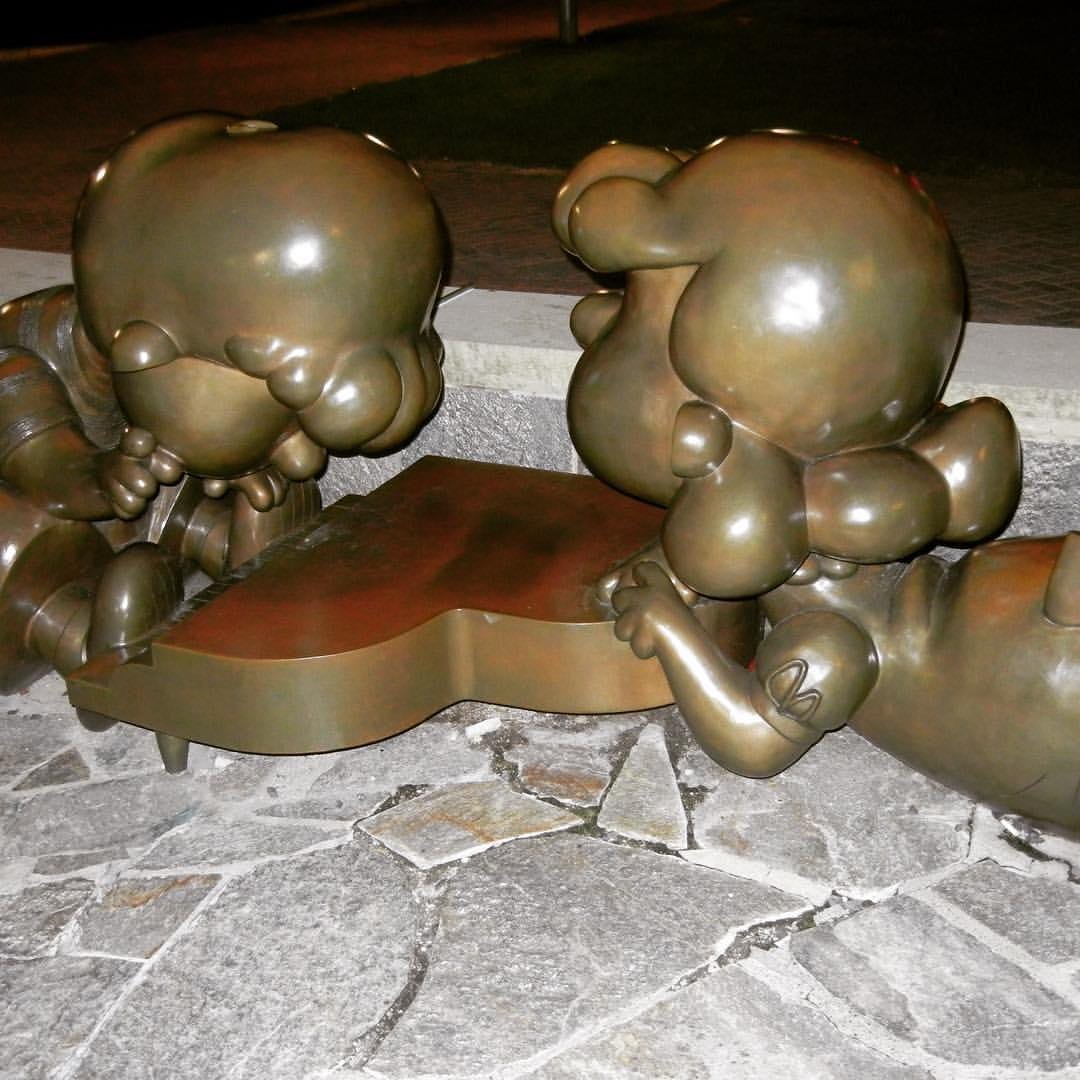
St. Paul seemed poorer than Minneapolis; we arrived downtown just as a big line was forming near the arena where the Minnesota Wild play. It took me a while to realize that they were lining up outside a homeless shelter just down the street, perhaps for the evening meal.
We biked back with our lights on along a street of mansions from the early twentieth century, one of which was all lit up for what looked like a wedding reception on the spacious grounds. It could have been the setting for a novel by hometown boy F. Scott Fitzgerald, whose novel The Great Gatsby is still perhaps the greatest work on class, money and the American dream.
Later that weekend, we chatted about the upcoming election with the woman who ran our Airbnb. She was worried that Hilary Clinton might lose to Donald Trump and said if that happened she’d look into moving to Canada.

On several other trips we’ve biked, hiked and paddled around the northern parts of the state.
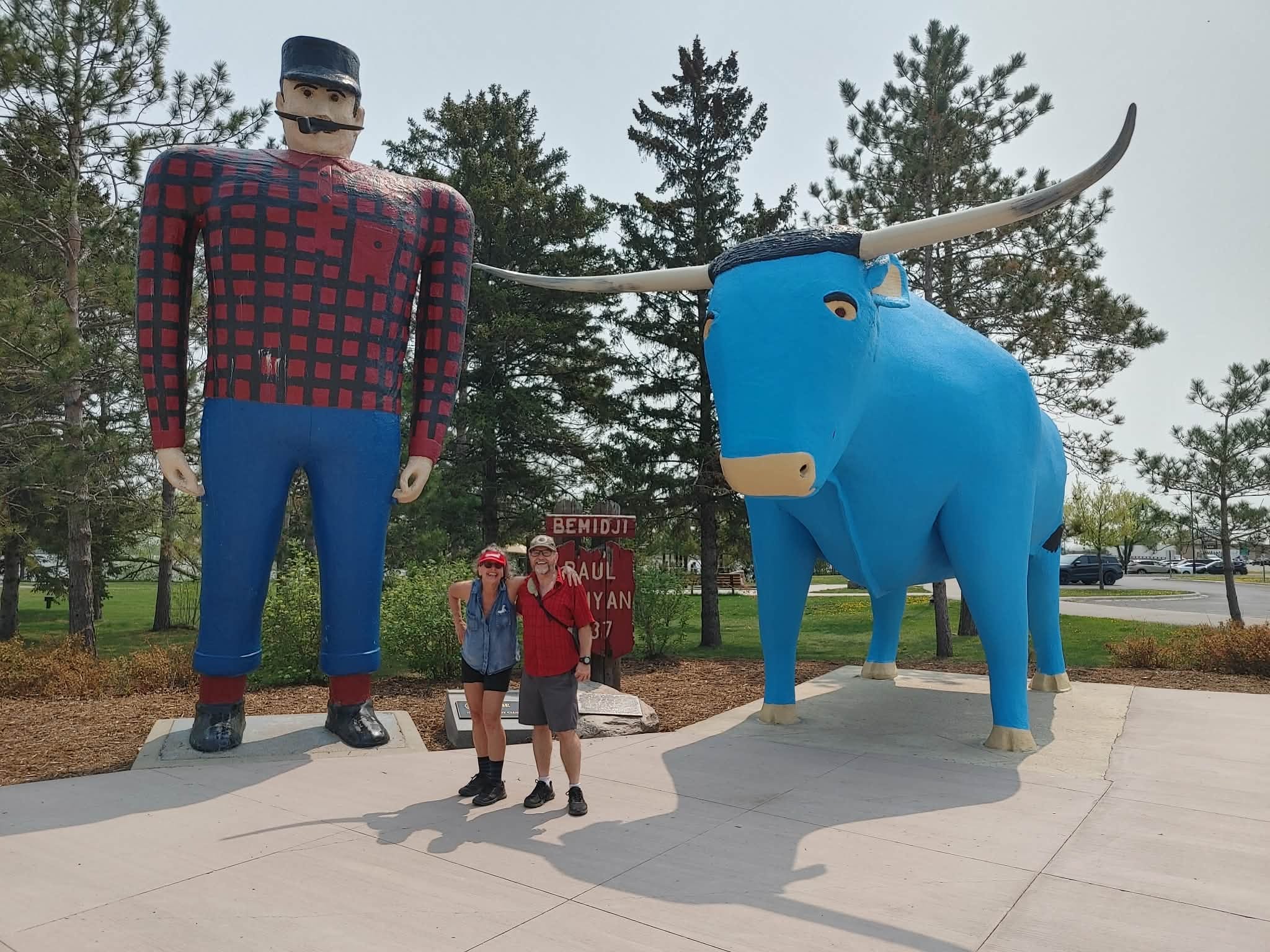
On a camping trip to Bemidji State Park we biked into the small college town of Bemidji for pasta and negronis and ended up being included in a wedding shower/stagette scavenger hunt – the young women in the group had to find various things and people around downtown, including a married couple who’d been together for more than 10 years. Rosemary also gave them some practical relationship advice. Before making a big commitment with somebody, she told them, ask some big questions to make sure that your values line up.
On another trip, we spent a few days hiking and biking along the shore of Lake Superior around Duluth and visited a little museum in the lakehead city where I learned a lot more about the Edmund Fitzgerald. It reminded me that one of the most important songs by the quintessential Canadian singer-songwriter told the story of an American ship hauling Minnesota ore from a port in Wisconsin to another in Ohio.
After we bought our little trailer during covid, we took it down to Minnesota a few times, in part because the state’s long-distance bike trails offer so many opportunities to explore. Once, our route took us through Hibbing, the childhood home of Bob Dylan, just in time for the annual Dylan festival.
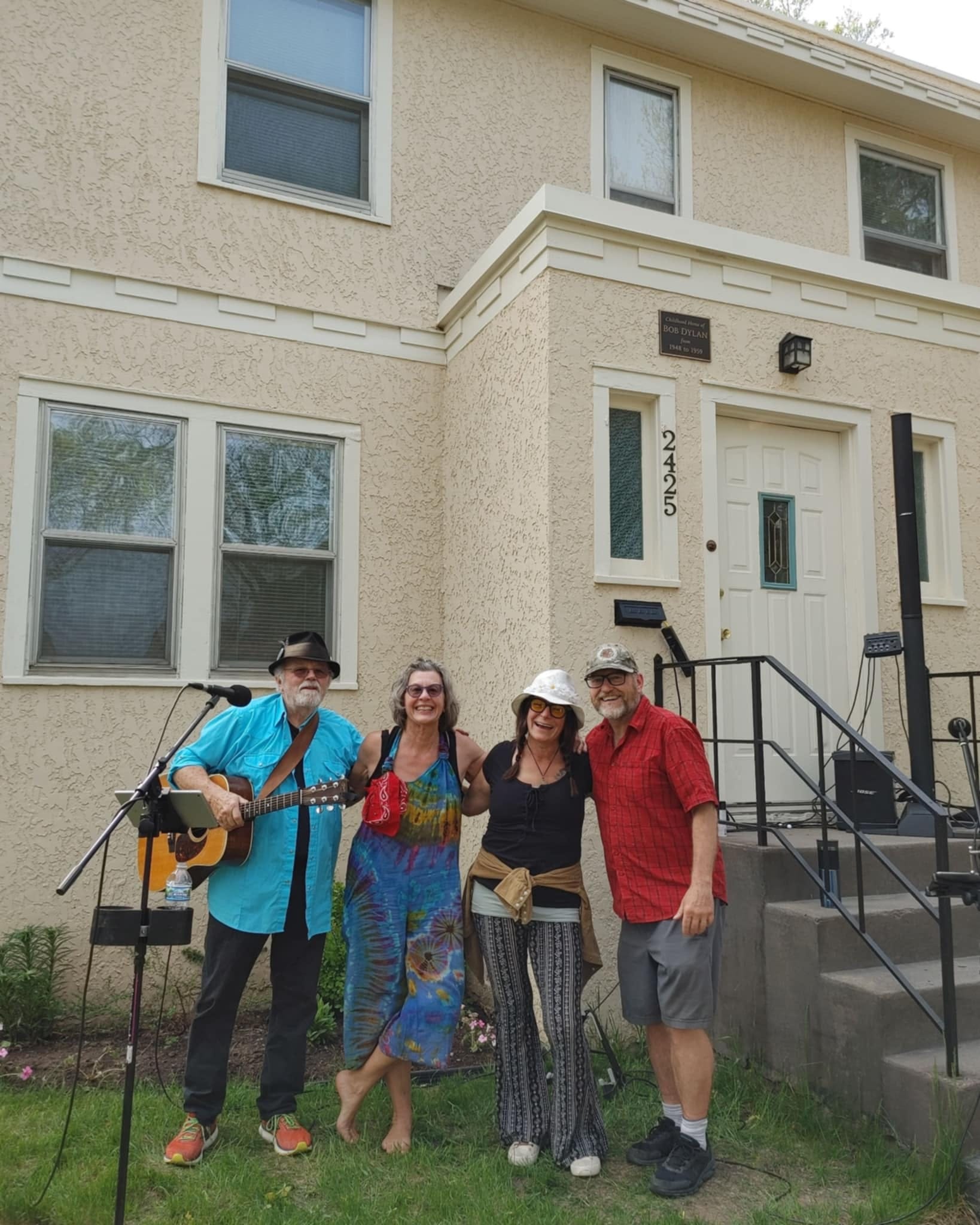
There was a concert on the front yard of Dylan’s family home. There were people who’d known young Robert Zimmerman when they were kids. There were tours of Hibbing High School, which has a sculpture out front commemorating the Nobel Prize for Literature won by the school’s most famous alumnus.
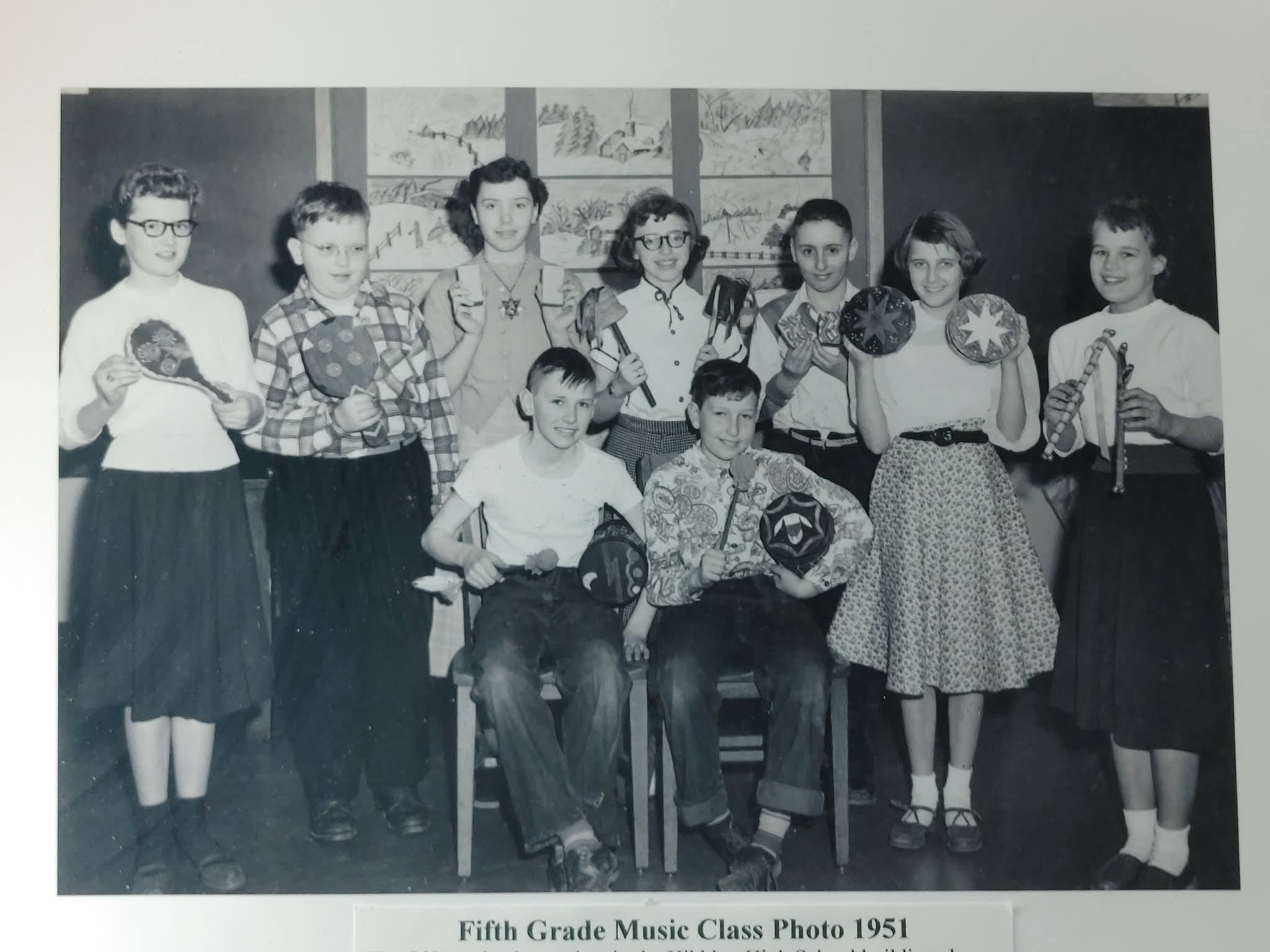
Hibbing High School was built during a boom period in the town’s mining industry, when iron pulled out the ground was in high demand for the rapidly growing automotive industry and for the steel skeletons of skyscrapers springing up in American cities. The building speaks to an optimistic time in the U.S., when Americans believed in the future and in education as a public good. It has a huge auditorium for school plays and band concerts with rich upholstery and velvet curtains. It has Italian tiles in the ceiling of the main hallways and entrance. Its library is adorned with allegorical murals depicting Art and Science and Poetry and one huge wall-sized mural celebrating The Story of Iron, filled with heroic workers finding, mining, and processing iron and transforming it into buildings and tools for living.
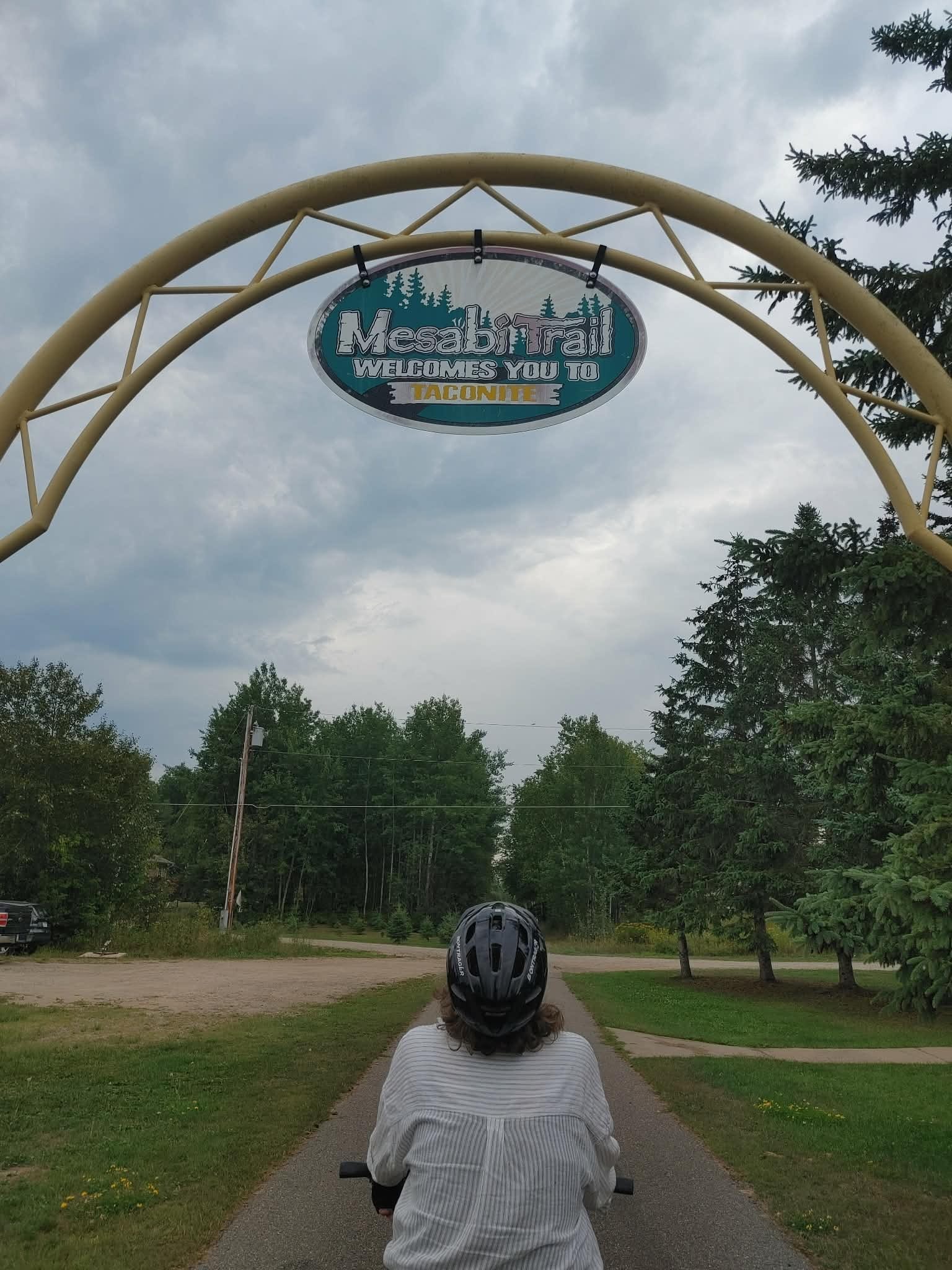
The last time I was Minnesota, we took our trailer down and camped just outside St. Paul in order to attend the first running of the Minnesota Yacht Club Music Festival just across the river from downtown. It was the biggest music festival I’ve ever been to; some 50,000 people were there and Alanis Morissette was the mainstage headliner. Of course she played all the big hits from Jagged Little Pill, but she closed with a later song, the one with the chorus that includes:
“Thank you, terror
Thank you, disillusionment”
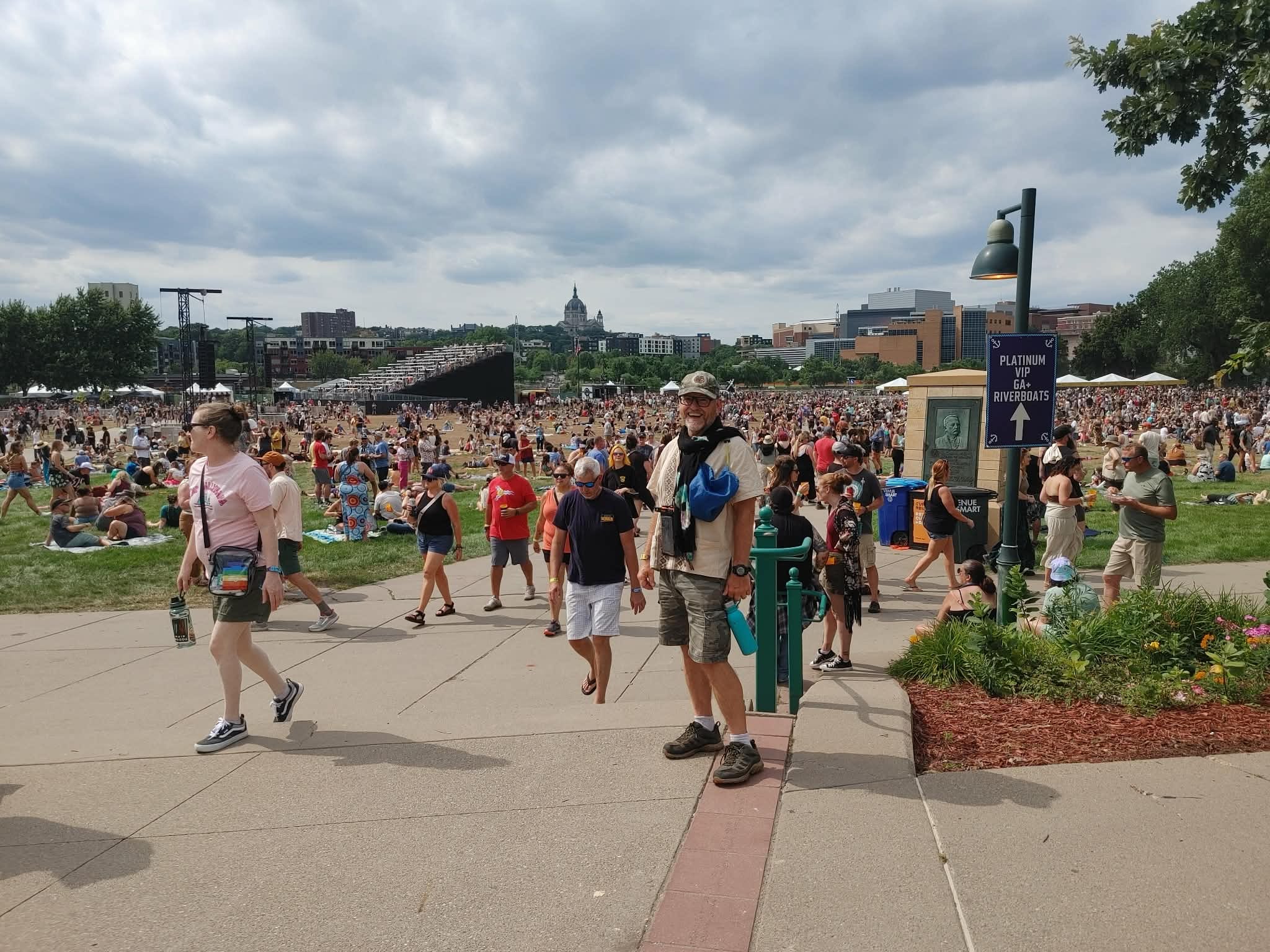
The next day, we visited the Minneapolis Art Institute. It’s a fantastic museum, with a great permanent collection, and it’s free. Established in 1889 with donations from bankers and manufacturers who got rich in America’s original Gilded Age, it has some 100,000 works in its collection.
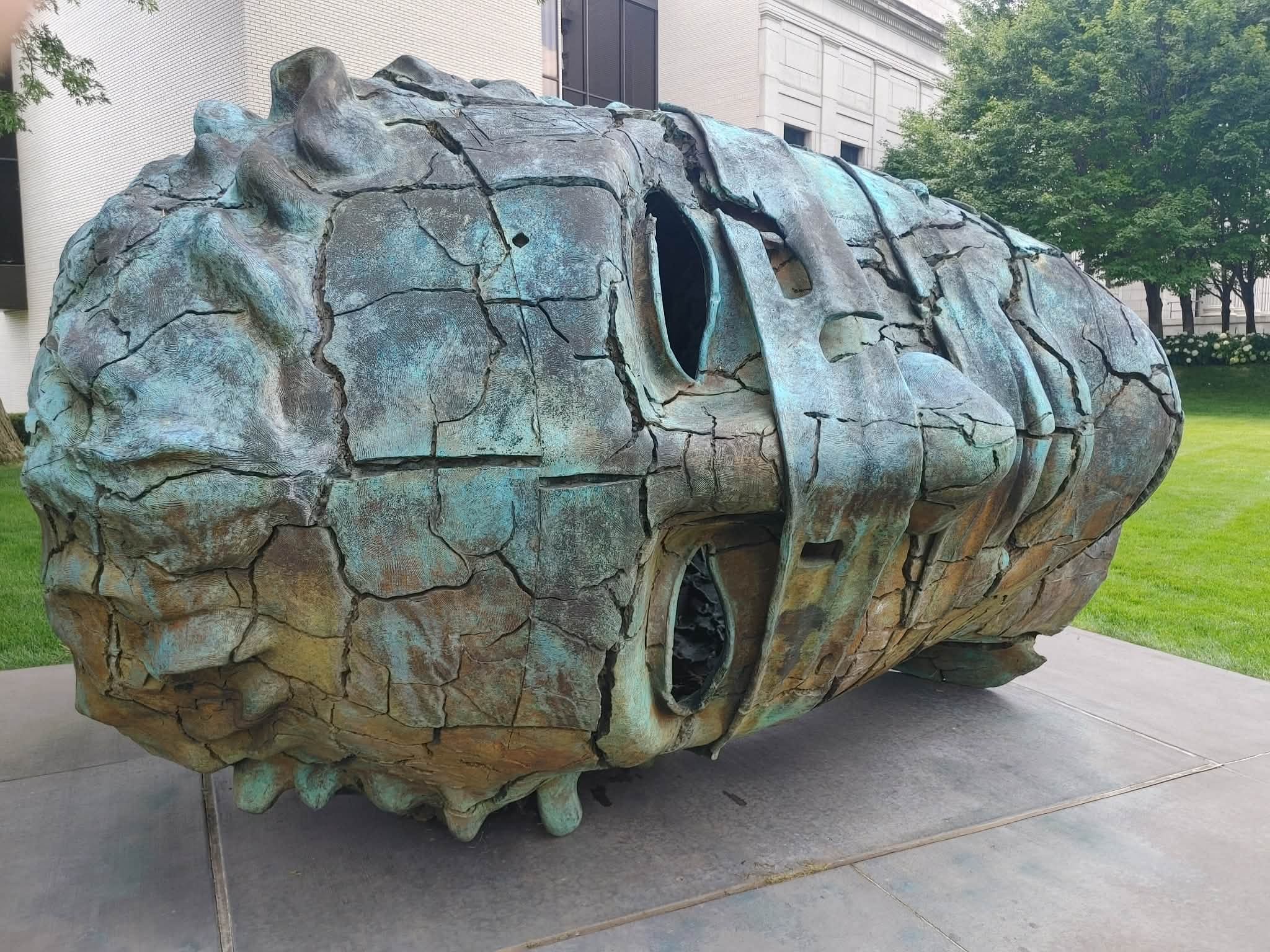
Sadly, I won’t be seeing a special touring show from Berlin’s Neue Nationalgalerie that opens there this March. It’s on German art from 1900 to 1945. Yes, this spring and summer, the art lovers of Minneapolis will be taking in the dark and challenging artworks of the Weimar years, when a fragile democracy was being trampled in the streets by the boots of stormtroopers.
That, Alanis, is ironic.
During our drive home on that trip, we heard some good news. After a poor debate performance had made many pundits and political insiders write off Joe Biden’s chances of re-election, Vice President Kamala Harris had stepped forward to take his place as the Democratic candidate in that fall’s election.
With a younger, dynamic candidate, one whose background as a prosecutor would respond to “soft on crime” concerns of centrist voters, how could they possibly lose? A few days later, Harris picked America’s Dad, the cuddly former football coach turned governor of Minnesota, Tim Walz, to be her running mate.
We breathed a sigh of relief. America would be saved by Minnesota Nice.
Thanks for reading Wandering Writer Bob Armstrong! Subscribe for free to receive new posts and support my work.
It was my first visit to Minnesota and my first encounter with the phenomenon known as Minnesota Nice. Rosemary and I had biked across the city and joined a long line at the Sea Salt Eatery in Minnehaha Park.
It was a beautiful Saturday afternoon and the restaurant had been highly recommended, so it was looking like a long wait. A guy just in front of us assured us that the food was worth it. He was talkative and chatting up people in front and behind. At some point he went up to the bar and came back with a big pitcher of beer and some glasses and poured drinks for everyone to make the wait go faster.
The province I live in calls itself Friendly Manitoba, but somebody buying a pitcher of beer for strangers in a restaurant line-up is not something I’d ever encountered before.
After lunch, before continuing along the city’s beautiful network of bike trails known as the Grand Rounds, we walked down below Minnehaha Falls, where a little creek drops into the steep gorge of the Mississippi River. It had been a wet spring in Minnesota and so the creek was running high and locals said they’d never heard the falls roar like that.
In the pool below the falls, a man let his dog off leash for a moment to cool off in the water and the animal got caught by the current and pushed downstream, the man and a few bystanders trying in vain to reach it. The current was dangerously strong and the man himself ended up getting taken down as well.
Some people ran along the shore trying to help while others pulled out phones to call 911 and soon a rescue vehicle was coming down the trail. The man was rescued. I’m not sure if they got to the dog before it was pulled into the big river.
It was sudden. It was a close call. Things could have turned out a lot worse.
On my second trip to Minnesota, we stayed at an Airbnb not far from Minnehaha Park and this time we decided to cross the Mississippi and explore St. Paul.
We biked along the big river to downtown and the state capital building and stopped for beer at bratwurst at an Oktoberfest celebration, where somebody commented to Rosemary about the attractiveness of Canada’s then-new prime minister compared to the Republican candidate for president.
St. Paul seemed poorer than Minneapolis; we arrived downtown just as a big line was forming near the arena where the Minnesota Wild play. It took me a while to realize that they were lining up outside a homeless shelter just down the street, perhaps for the evening meal.
We biked back with our lights on along a street of mansions from the early twentieth century, one of which was all lit up for what looked like a wedding reception on the spacious grounds. It could have been the setting for a novel by hometown boy F. Scott Fitzgerald, whose novel The Great Gatsby is still perhaps the greatest work on class, money and the American dream.
Later that weekend, we chatted about the upcoming election with the woman who ran our Airbnb. She was worried that Hilary Clinton might lose to Donald Trump and said if that happened she’d look into moving to Canada.
Over the next few years, we had a few short trips to Minnesota.
One was a camping trip to Bemidji State Park, during which we biked into the small college town of Bemidji for pasta and negronis and ended up being included in a wedding shower/stagette scavenger hunt – the young women in the group had to find various things and people around downtown, including a married couple who’d been together for more than 10 years. Rosemary also gave them some practical relationship advice. Before making a big commitment with somebody, she told them, go for a walk and ask some big questions to make sure that your values line up.
On another trip, we spent a few days hiking and biking along the shore of Lake Superior around Duluth and visited a little museum in the lakehead city where I learned a lot more about the Edmund Fitzgerald. It reminded me that one of the most important songs by the quintessential Canadian singer-songwriter told the story of an American ship hauling Minnesota ore from a port in Wisconsin to another in Ohio.
After that, the next time I was in Minnesota we were on a spring trailer trip. Like most of our trips to the state, it was another biking and hiking trip, with visits cities and towns en route. Our route took us through Hibbing, Minnesota, the childhood home of Bob Dylan, just in time for the annual Dylan festival.
There was a concert on the front yard of Dylan’s family home. There were people who’d known young Robert Zimmerman when they were kids. There were tours of Hibbing High School, which has a sculpture out front commemorating the Nobel Prize for Literature won by the school’s most famous alumnus.
Hibbing High School was built during a boom period in the town’s mining industry, when iron pulled out the ground was in high demand for the rapidly growing automotive industry and for the steel skeletons of skyscrapers springing up in American cities. The building speaks to an optimistic time in the U.S., when Americans believed in the future and in education as a public good. It has a huge auditorium for school plays and band concerts with rich upholstery and velvet curtains. It has Italian tiles in the ceiling of the main hallways and entrance. Its library is adorned with allegorical murals depicting Art and Science and Poetry and one huge wall-sized mural celebrating The Story of Iron, filled with heroic workers finding, mining and processing iron and transforming it into buildings and tools for living.
The last time I was Minnesota, we took our trailer down and camped just outside Minneapolis in order to attend the first running of the Minnesota Yacht Club Music Festival in downtown St. Paul. It was the biggest music festival I’ve ever been to; some 50,000 people were there and Alanis Morissette was the mainstage headliner. Of course she played all the big hits from Jagged Little Pill, but she closed with a later song, the one with the chorus that includes:
“Thank you, terror
Thank you, disillusionment”
The next day, we visited the Minneapolis Art Institute. It’s a fantastic museum, with a great permanent collection, and it’s free. Established in 1889 with donations from bankers and manufacturers who got rich in America’s original Gilded Age, it has some 100,000 works in its collection.
Sadly, I won’t be seeing a special touring show from Berlin’s Neue Nationalgalerie that opens there this March. It’s on German art from 1900 to 1945. Yes, this spring and summer, the art lovers of Minneapolis will be taking in the dark and challenging artworks of the Weimar years, when a fragile democracy was being trampled in the streets by the boots of Stormtroopers.
That, Alanis, is ironic.
During our drive home on that trip, we heard some good news. After a poor debate performance had made many pundits and political insiders write off Joe Biden’s chances of re-election, Vice President Kamala Harris had stepped forward to take his place as the Democratic candidate in that fall’s election.
With a younger, dynamic candidate, one whose background as a prosecutor would respond to “soft on crime” concerns of centrist voters, how could they possibly lose? A few days later, Harris picked America’s Dad, the cuddly former football coach turned governor of Minnesota, Tim Walz, to be her running mate.
We breathed a sigh of relief. America would be saved by Minnesota Nice.
What a heartfelt description of that beautiful state. It is close to all of our hearts right now and in Manitoba for sure. My dad grew up in a tiny border town , the last town on the #12 before you hit Warroad. It’s called Middlebro. Consequently I have many family members in Minnesota and Minneapolis. I have been going there all my life. I wonder if I ever will again. And I am very sick with worry for everyone there.
It's always beautiful and always interesting...